


Jacksons Let's Go Rewards
4.81.04K Reviews
App Specs
- Version
- 2026.5.0
- Updated On
- License
- Free
- Downloads
- 100,000+
- Developer
- PAR Retail
- Categories
- Food & Drink
- Platform
- Android
Screenshots
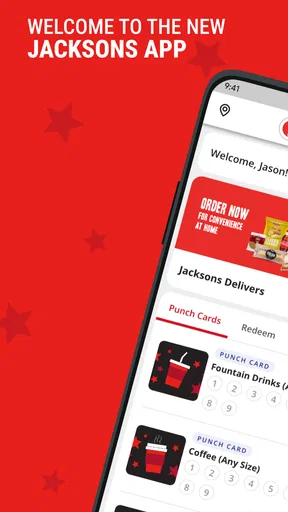
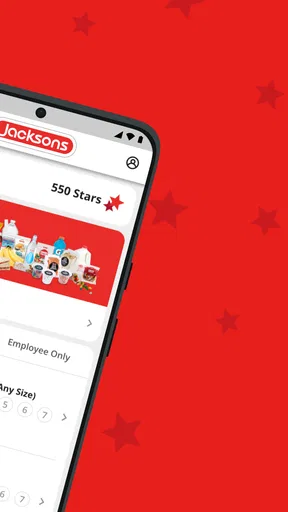
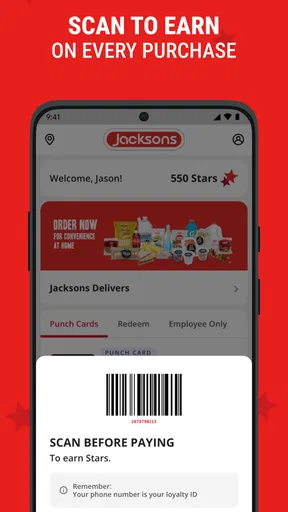
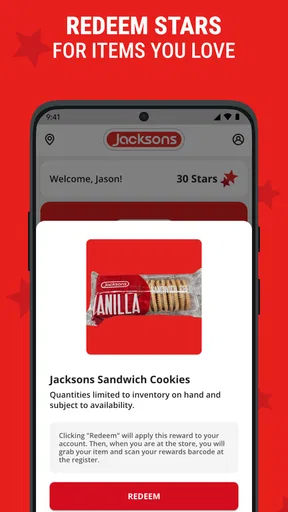
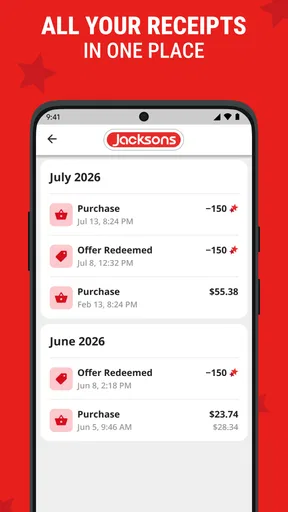
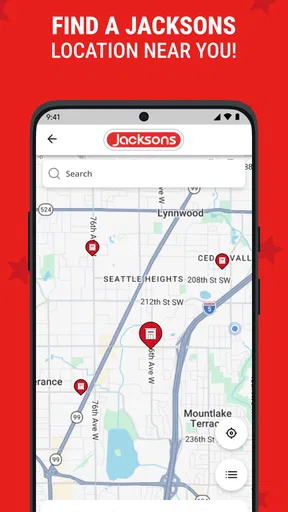
 Analysis by AppCompare
I spent time with Jacksons Let's Go Rewards as a practical companion for visits to Jacksons, and my first impression was that it makes the most sense when you treat it as a loyalty tool rather than a complete food-and-drink guide. Its purpose is straightforward: help regular customers earn and save while they are already shopping. That narrow focus is also its main strength, because the app does not need to compete with a general restaurant directory or a broad coupon platform to be useful.
Developed by PAR Retail, this free Food & Drink app has built a strong audience, with an average score of 4.8 from roughly seventeen thousand ratings and more than one hundred thousand installs. Those figures suggest that the basic idea works well for many customers, although a high store score cannot tell you whether the rewards fit your own shopping habits. I would look at it as a convenient extra for Jacksons customers, not as a reason by itself to change every purchase routine.
How the app feels during an ordinary Jacksons visit
I find the ordinary Jacksons visit is the right place to judge whether this loyalty app genuinely earns space on your phone: the key question is whether it helps without slowing down a purchase you were already making. I’d focus on the small choices that shape that experience, especially what I check before arriving and how I decide whether an offer is worth using.
Speed expectations before and during a purchase
In normal use, a loyalty app earns its place by staying out of the way. I do not want to spend several minutes opening screens, searching through offers, or trying to remember how a reward is meant to be used while standing at a counter. Jacksons Let's Go Rewards is best approached with that expectation: prepare before you reach the register, then use the app as a quick part of the transaction rather than exploring it at the busiest moment.
The most useful workflow is to open the app before entering the store, check what is available, and decide whether any reward actually matches what you planned to buy. That small habit is more valuable than browsing impulsively. If you wait until the line is moving, the benefit of a discount can be offset by the friction of checking details on a small screen. I found that loyalty apps are most satisfying when they support a decision I have already made, and this one fits that pattern.
There is also a practical distinction between loading the app and using it repeatedly. A single visit may involve checking the current balance, reviewing an offer, and presenting the relevant account information. Someone who only opens it occasionally may not notice much difference from other loyalty tools. A regular customer, however, can make the interaction feel faster by checking the account after a purchase, while the visit is still fresh, instead of trying to reconstruct activity later.
My main speed tip is simple: check the app before you are ready to pay. This avoids the most common loyalty-app problem, which is not necessarily slow software but poor timing. It also gives you a chance to decide whether an offer is worth using today or whether saving it for a more suitable purchase makes more sense.
Worth Reading Before You Choose

EA SPORTS FC Mobile 26 Is a Bigger Football Game, but It Takes Time

Flipboard Shows What News Apps Must Do Beyond the Feed

Switching to Android Auto Means Rethinking Your Driving Routine

Google Calendar Makes a Crowded Week Easier to Manage

Ludo King Makes the Most of the Minutes Between Plans

Baby Panda World Brings Quick Play to Modern Phones, but Its Game Library Feels Busy
What happens during heavier use
The app becomes more demanding from a user-experience point of view when you use it across several visits, compare multiple rewards, or try to manage your account while moving between locations. That is when organization matters more than the novelty of earning points. I would avoid treating every available saving as equally valuable. A reward that requires an unplanned purchase is not automatically a saving, especially for a quick stop where convenience is the priority.
A realistic everyday example is a commuter stopping at Jacksons for a drink and a snack on the way home. Before leaving work, I would open the app, see whether an appropriate reward is ready, and decide what I would buy without it. If the offer matches that routine purchase, using it is easy to justify. If it encourages an extra item I would not otherwise choose, I would skip it. This approach keeps the loyalty program working for my budget instead of quietly changing my spending.
Another useful scenario is the customer who makes several small visits during a week rather than one large shop. In that case, the app has more practical value because the earning process becomes part of an existing routine. The trade-off is that the benefit may feel less noticeable if visits are infrequent or if your usual purchases do not align with available rewards. It is not a universal savings tool; it is a better fit for people whose normal stops already include Jacksons.
Heavy use also exposes a limitation shared by many loyalty apps: attention. The more often I check offers, the easier it is to spend time optimizing a small purchase. I would not recommend constantly refreshing the app or planning a whole day around its rewards. The sensible use is quick review, deliberate choice, and then getting on with the visit. That keeps the app from becoming a distraction.
Reliability and recovering from interruptions
For a loyalty app, reliability is not only about whether the application opens. The important question is whether I can recover gracefully if I open it in a poor signal area, switch to another app, or arrive at the checkout with less time than expected. My advice is to give the app a moment before joining a queue and avoid leaving all preparation until the final second.
If an interruption occurs, the safest habit is to return to the app and review the account screen again rather than assuming that a previous action completed. That is especially important when a reward or account detail matters to the purchase. I would also keep expectations realistic: an app can make loyalty information easier to access, but it cannot remove every dependency on connectivity, store procedures, or the checkout process.
This is one reason I prefer using the app as a prepared companion. I would open it while I have time, confirm what I intend to use, and then present it at the appropriate point. That workflow reduces the chance of fumbling through menus in front of other customers. It also makes recovery simpler because I know what I was trying to do before the interruption.
For people who switch phones, reinstall apps, or frequently clear application data, account recovery deserves attention before relying on the app for an important reward. I would make sure I can identify the account and access it normally before assuming that a new device will feel identical to the old one. This is not a criticism unique to Jacksons Let's Go Rewards; it is a sensible precaution for any loyalty service where accumulated progress matters.
Device constraints and age coverage
The app requires Android 9 or later, so compatibility is worth checking if you use an older Android phone. That requirement is modest for many current devices, but people who keep a phone for several years should confirm the operating-system version before planning around the app. I would not replace a working phone just for a loyalty program; if the device falls outside the requirement, the ordinary in-store experience may be the more practical choice.
The listed age classification is Mature 17+. That is an important detail for families sharing devices or managing app access for younger users. The classification does not automatically tell me how every screen will feel in daily use, but it does mean parents and guardians should consider whether the app is appropriate for the person using the device. For an adult customer, it is simply part of deciding whether the app belongs on a personal phone.
Resource demands are difficult to judge from the store page alone, so I would not promise that it uses a particular amount of storage, battery, or mobile data. In practical terms, a loyalty app should be treated as another installed service that may need occasional attention. If your phone is already short on space or you keep background activity tightly controlled, ask whether the savings you expect justify adding another app. For a frequent Jacksons customer, the answer may be yes; for an occasional visitor, probably not.
Older or less capable phones can also make a simple app feel slower than it would on a newer device. Screen responsiveness, multitasking, and the time needed to switch between the app and other services all affect the checkout experience. I would test it during a relaxed visit rather than forming a final opinion while rushing. That gives you a fairer sense of whether the device, the connection, or the app itself is creating friction.
Where it beats the usual alternatives
The closest alternative is often doing nothing: pay normally and ignore loyalty programs. That option is effortless, but it leaves any available earning or saving opportunity unused. Another alternative is a general coupon app, which may cover more retailers but can require broader searching and less relevant offers. Jacksons Let's Go Rewards has the advantage of being focused on one shopping environment, so it can be more useful when Jacksons is already part of your routine.
A paper receipt or a cashier mentioning a promotion can still be better for a one-off visitor who does not want another account or app. Likewise, a customer who shops across many unrelated stores may prefer a broader rewards service, even if it is less tailored. I would choose Jacksons Let's Go Rewards when the store is a regular stop and I want a direct way to track the relationship. I would skip it when my visits are rare, my phone is constrained, or I strongly prefer keeping loyalty activity offline.
The focused design also creates a trade-off. A specialized rewards app can feel clearer than a general coupon marketplace, but its usefulness is tied to Jacksons. It will not replace a meal-planning app, a restaurant discovery service, or a complete grocery savings system. That is not a weakness in its intended role, but it matters if you expect one download to manage every food purchase.
What I would do to get more value from it
I would begin by installing the app only if I already visit Jacksons often enough for rewards to accumulate naturally. After signing in, I would take a few minutes to understand where the account information and available savings appear. I would then make a habit of checking it before a visit, not after reaching the till. This creates a repeatable routine without turning every purchase into a research project.
My second tip is to compare the reward with the purchase you intended to make. If the reward fits, use it. If it changes the basket, calculate the real cost in your head before accepting the apparent saving. This is a small but important distinction, and it is where loyalty programs can either help or encourage unnecessary spending.
Third, I would review the account after a visit if the earning or saving matters to me. That gives me a chance to notice whether the expected result appeared and to deal with any issue while I still remember the transaction. Waiting several weeks makes it harder to explain what happened. Keeping that review brief is enough; there is no need to monitor the app constantly.
Finally, I would keep the application updated through the normal app-store process and test it after a major phone change. The current Android version is 2026.5.0, and the app has been available since January 10, 2018, so it is an established product rather than a brand-new experiment. Even so, a long-running app can change its screens and workflows over time, which is another reason to verify the process before relying on it during a busy stop.
Who should use it, and who should pass?
I would recommend it most strongly to adults who visit Jacksons regularly, prefer digital rewards, and are willing to check an offer before paying. It can also suit someone who makes frequent small purchases and wants those visits to contribute to a loyalty balance instead of remaining entirely separate transactions. The free price removes the financial barrier to trying it, although your time and attention still have value.
I would be more cautious with occasional visitors. If you stop at Jacksons only once in a while, remembering the account and checking the app may be more work than the benefit is worth. The same applies to people who dislike creating accounts, do not want loyalty notifications competing for attention, or use an older Android device that does not meet the operating-system requirement.
It is also not the right choice for someone looking for broad food recommendations, restaurant bookings, nutrition tracking, or a universal discount wallet. Its usefulness comes from the Jacksons connection. Choosing it for anything beyond that role would create expectations the app is not designed to meet.
My performance verdict after regular use
Jacksons Let's Go Rewards succeeds when I use it as a quick, prepared step in a Jacksons visit. The perceived speed is best when I check it before the queue, the heavier-use moments are manageable when I avoid over-optimizing every purchase, and recovery is easier when I confirm important account actions rather than assuming they went through. Those are practical habits, but they make a bigger difference than repeatedly browsing the app.
Its strongest quality is focus. PAR Retail has created a dedicated loyalty app for customers who want to earn and save at Jacksons, and the large user base and high average score show that this approach has found an audience. The main limitations are equally clear: the value depends on visiting Jacksons often enough, the app is not a replacement for broader food tools, and older devices or rushed checkout situations can reduce the convenience.
My final recommendation is therefore conditional but positive. If Jacksons is already part of your weekly routine, I think the free download is worth trying, provided your Android phone runs version 9 or later and the Mature 17+ classification is suitable for the user. If you are only passing through occasionally, stick with the simplest payment method and do not feel pressured to add another app. For the right customer, this is a useful digital loyalty companion; for everyone else, its narrow focus is exactly why it may not earn a permanent place on the phone.
Pros
- Earn points and rewards through purchases at participating Jacksons locations.
- Conveniently keeps loyalty benefits and offers available on your mobile device.
- Exclusive promotions can help regular customers save on snacks and fuel.
- Simple account access makes it easy to track available rewards and points.
- Useful for Jacksons customers who visit participating stores frequently.
Cons
- Benefits are limited to participating Jacksons stores and locations.
- You may need to share personal information when creating an account.
- Rewards and offers can have expiration dates or usage restrictions.
- The app is less useful for customers who rarely visit Jacksons stores.
- Points may not be credited if purchases or scans are completed incorrectly.
FAQs for Jacksons Let's Go Rewards
What is Jacksons Let’s Go Rewards?
Jacksons Let’s Go Rewards is the loyalty program connected with Jacksons convenience stores. After creating an account, members can typically collect rewards from eligible purchases, receive personalized offers, and access promotions through the official app or participating stores. Availability, earning rules, and benefits may vary, so it is worth checking the current program terms before relying on a specific reward.
How do I join Jacksons Let’s Go Rewards?
You generally join by downloading the Jacksons Let’s Go Rewards app, registering with your personal details, and following the verification instructions. You may need to provide an email address or mobile number and agree to the program’s terms and privacy policy. Registration is usually free, although some offers may require additional eligibility conditions or a participating store location.
How can I earn and redeem rewards?
Rewards are normally earned by identifying your membership at checkout, such as scanning an in-app membership code or using the account details linked to your profile. Once you reach the required balance or qualify for an offer, available rewards should appear in the app. Redemption rules can differ by promotion, including expiration dates, minimum purchases, exclusions, and participating locations.
Does the app provide fuel discounts and store promotions?
Jacksons Let’s Go Rewards may include fuel-related savings, product discounts, digital coupons, or limited-time promotions, depending on the current campaign and your location. Not every offer is available at every Jacksons store, and some promotions may require activation in the app before purchase. Always read the individual offer details to confirm qualifying products, dates, and redemption conditions.
Is Jacksons Let’s Go Rewards available on Android and iPhone?
The app is intended for supported Android and iOS devices, but compatibility can depend on your operating system version, region, and the current app release. Download it through the official Google Play Store or Apple App Store rather than unofficial websites. If the app does not work correctly, updating the operating system, reinstalling the app, or contacting Jacksons support may help.


